Morrie Swiss: A Handwritten Font That Works for Real Products
As a handmade seller and printable product creator, I spend a lot of time hunting for fonts that actually deliver. Some scripts look gorgeous in a preview but fall apart when you cut them on a Cricut or print them at sticker size. Others are so ornate you can barely read the word. When I stumbled across Morrie Swiss, I knew I had found something different. This handwritten font has a cool, simple, and elegant personality that translates beautifully from screen to physical product. It brings an authentic handcrafted feel without sacrificing readability or commercial usefulness.
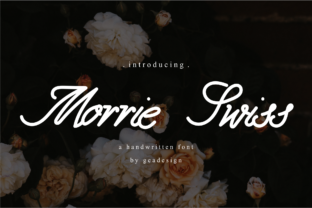
Morrie Swiss sits comfortably in the Script Handwritten category, but it avoids the overly fussy loops and dramatic flourishes that make many script fonts impractical for small-scale production. Instead, it offers a natural, flowing letterform that feels both modern and timeless. The letters have a relaxed rhythm, as if written with a quality pen by someone who values clarity as much as charm. That balance makes it a versatile choice for anyone who sells physical goods, creates digital downloads, or runs a small creative business.
The Visual Personality of Morrie Swiss
When I first tested Morrie Swiss, I noticed how the letterforms carry a gentle elegance without trying too hard. The strokes are clean, the spacing is thoughtful, and the overall impression is one of effortless sophistication. This is not a loud, attention-grabbing display font. It is a quiet, confident typeface that lets the message shine. For a handmade seller, that kind of restraint is gold. You want your products to feel personal and curated, not chaotic or hard to read.
The handwritten quality is genuine without being messy. Each character feels intentional. The lowercase letters have a consistent slant and height, which helps maintain readability even when the font is used at smaller sizes. The uppercase letters are slightly more refined, making them ideal for names, short titles, and initial emphasis. This mix of casual warmth and careful structure gives Morrie Swiss a broad appeal for everything from wedding stationery to everyday product labels.
Practical Uses for Handmade Products and Printables
Morrie Swiss adapts well to a surprising range of craft applications. I have used it for candle labels, and the results were exactly what I hoped for. The font printed clearly at a small scale, and the handwritten feel added a personal touch that customers commented on. For bath and body products, soap wrappers, or cosmetic jars, this font conveys a boutique quality without looking generic. It feels like a brand that cares about details.
Invitation designers will appreciate how Morrie Swiss handles longer names and event details. Birthday invitations, bridal shower cards, and save-the-dates benefit from the font's readable flow. It does not force guests to squint or guess the wording. The elegance is present, but the legibility is never sacrificed. For wedding stationery, especially welcome signs, seating charts, and program covers, Morrie Swiss brings a refined handwritten look that photographs well and reads beautifully in person.
Printable wall art is another natural fit. Quotes, affirmations, and short phrases set in Morrie Swiss feel like handwritten notes you would frame and display. The simplicity of the lettering means it works equally well on its own or paired with decorative elements. I have also used it for planner pages, sticker sheets, and bullet journal templates. The font adds personality without overwhelming the layout.
Product Tags, Labels, and Packaging
For small shop owners, product tags and packaging are often the first physical touchpoint a customer has with your brand. Morrie Swiss elevates that experience. Whether you are designing hang tags for handmade clothing, kraft paper labels for pantry goods, or glass jar stickers for preserves, this font delivers a consistent handmade aesthetic. The key advantage is that it looks attractive without needing elaborate design skills. A simple layout with Morrie Swiss and a clean border can feel complete and polished.
I have also tested Morrie Swiss on adhesive vinyl for mugs, tumblers, and tote bags. The letterforms cut cleanly on my cutting machine, with minimal weeding frustration. The connected flow of the script does not create awkward internal cutouts that plague some overly ornate fonts. For farmhouse-style signs, chalkboard prints, and wood slice decorations, the font's natural hand-lettered appearance lends authenticity to rustic and modern farmhouse designs alike.
Readability and Production Considerations
One concern I always have with script fonts is how they perform at small sizes or on textured materials. Morrie Swiss handles these situations well. The x-height is generous enough that lowercase letters remain distinct even when printed small. The ascenders and descenders are moderate, which means the font does not crowd itself on a narrow label or tag. For stickers that need to convey ingredient lists, short instructions, or brand names, this readability is a practical advantage.
When cutting with a Cricut or Silhouette, I recommend using Morrie Swiss at a minimum size of about half an inch for vinyl lettering. That gives the blade enough room to navigate the curves cleanly. For print-and-cut stickers, you can go smaller. Test a few samples on your material of choice before committing to a large production run, but in my experience, the font behaves predictably and reliably.
For mockup previews and digital product images, Morrie Swiss renders beautifully on screen. It has a smooth, contemporary look that photographs well and displays without pixelation. If you sell digital templates or editable printables, your customers will appreciate that the font is both attractive and functional across different devices and software programs.
Font Pairing Ideas for a Cohesive Brand Look
Morrie Swiss works best as a display or accent font, but it pairs well with supporting typefaces for longer text and structured layouts. One of my favorite combinations is Morrie Swiss with a clean sans serif font. The contrast between the handwritten elegance of Morrie Swiss and the straightforward clarity of a sans serif creates a balanced, modern brand identity. Use Morrie Swiss for your product name, tagline, or main heading, and let the sans serif handle ingredient lists, descriptions, or body text.
If your brand leans warmer or more traditional, consider pairing Morrie Swiss with a simple serif font. The serif adds a classic anchor, while the handwritten script brings approachability. This combination works well for wedding collections, boutique stationery, and artisan food packaging. Avoid pairing Morrie Swiss with another highly expressive script font, as the two can compete for attention. Let Morrie Swiss be the star and choose a neutral partner that supports rather than distracts.
What to Check Before You Buy
Before you purchase Morrie Swiss, take a moment to review the included styles and file formats. Many script fonts offer alternate characters, ligatures, and swashes that expand your design options. If Morrie Swiss includes these, you can create custom wordmarks, unique letter combinations, and decorative endings that make your products feel even more bespoke. Ligatures are especially useful for common letter pairs, as they help the script flow naturally without awkward gaps.
Also confirm that the font supports the characters you need. If you sell internationally or use accented letters for names or locations, multilingual support is essential. Check the file format as well. Most modern fonts include OTF and TTF files, which work in standard design software, Cricut Design Space, Silhouette Studio, and popular editing programs. Having both formats gives you flexibility across different tools and workflows.
Commercial Licensing and What It Means for Your Shop
If you sell physical products, templates, printables, digital downloads, SVG designs, or merchandise, commercial licensing is not just a technicality. It is a legal and ethical requirement. When you purchase a commercial license for Morrie Swiss, you gain the right to use the font in products you sell to customers. This includes printed labels, stickers, tags, mugs, shirts, tote bags, signs, and any other physical goods where the font appears as part of the design.
For digital products, a commercial license typically allows you to include the font in templates or printables that customers edit and print themselves. However, you usually cannot redistribute the font file itself as a standalone asset. Always read the specific licensing terms provided by the foundry or seller. A standard commercial license covers most handmade and small shop use cases, but if you plan to create large-volume merchandise or offer client work such as logo design or branding packages, check whether an extended license is needed.
Investing in proper licensing protects your business and supports the type designer who created Morrie Swiss. It also gives you peace of mind to use the font confidently across your product line without worrying about legal issues down the road. For anyone serious about building a brand around their craft, a quality commercial font is a worthwhile investment in your business identity.
Morrie Swiss has earned a permanent place in my font library because it solves a real problem: finding a handwritten font that looks elegant, reads clearly, and works reliably across physical and digital products. Whether you are designing candle labels, wedding invitations, farmhouse decor, boutique tags, or printable wall art, this font delivers a consistent, authentic handwritten aesthetic that your customers will notice and appreciate. It is a practical tool for creative sellers who care about both beauty and bottom-line results.